
The Problem Nobody Talks About
Signal & Noise: Building the Future of Cardiac AI — Post 1 of 6

There are roughly 300 million electrocardiograms (ECG’s) recorded every year [1]. That number is growing fast — driven by an explosion of wearable devices, ambulatory monitors, and remote patient monitoring programs that are putting cardiac sensors on more people, in more places, for longer stretches of time than at any point in human history.
On paper, this should be one of the great stories in modern healthcare. More data. Earlier detection. Better outcomes.
But there’s a problem. A fundamental one. And almost nobody is talking about it.
The Noise Problem
If you’ve ever worn a Holter monitor — that clunky box clipped to your belt, wires running to sticky electrodes on your chest — you know the drill. You wear it for 24 to 48 hours [2]. It records every heartbeat. Then a cardiac technician sits down and manually reviews the data, strip by strip, looking for the moments that matter.
Here’s what most people don’t realize: a significant portion of that recording is degraded by noise. Baseline wander from breathing. Motion artifacts from walking, sleeping, shifting in a chair. Muscle interference. Electrode contact issues. Environmental noise from power lines and wireless devices [15].
The technician’s job isn’t just to find the anomalies. It’s to fight through the noise to determine whether what they’re seeing is a real cardiac event or just garbage signal.
This is grueling work. With over 300,000 data points in a single Holter test and manual review taking 35 to 50 minutes per recording [4], a skilled ECG technician can review only a handful of cases in a day. Not because they’re slow — because they’re meticulous, and the data fights them at every step. The result is a diagnostic bottleneck that has been baked into cardiac monitoring for decades — one that the industry estimates leaves a global shortfall of over 42,000 cardiac technicians [4].
And it gets worse with longer recordings. As monitoring durations extend from 48 hours to 7 days to 14 days [3] — a clear clinical trend driven by conditions like paroxysmal atrial fibrillation that are intermittent and easy to miss — the volume of data a technician must review grows proportionally. But the technology helping them hasn’t kept pace.
The human cost is real. Technician burnout. Alarm fatigue. Staff shortages. And at the end of the chain, the patient cost: diagnoses delayed or missed entirely because the signal was lost in the noise.
As Dr. Paul Dorian, a renowned cardiac electrophysiologist — Professor of Medicine and former Director of the Division of Cardiology at the University of Toronto, past President of the Canadian Heart Rhythm Society, and Medical Innovation Architect and Head of the Medical Advisory Board at AIML [5] — with over 580 peer-reviewed publications, put it:
“Identifying true P and QRS complexes after noise and artefact are removed would allow automated detection of specific abnormalities, and substantially increase the probability that a true critical abnormality is captured, while also limiting false positives — which are often detected by Technicians but are time-consuming, fatiguing, and lead to ‘alarm fatigue.’”
He’s describing a system that is failing both the people operating it and the patients depending on it.
The Deeper Problem Nobody Mentions
But noise is only half the story. And if I’m being honest, it’s the half the industry is comfortable talking about because it feels like a solvable engineering challenge. Reduce the noise. Clean up the signal. Problem solved.
Except it isn’t. Because even when the signal is clean enough to work with, the way the industry analyzes it is fundamentally limited.
Here’s the part that will surprise you: virtually every ECG analysis system on the market today — from the software inside hospital-grade machines to the algorithms running on the latest consumer wearables — operates on the same basic principle [6]. Rhythm classification. Pattern matching. The software looks at a stretch of ECG data and asks a simple question: Does this look like atrial fibrillation? Does this look like normal sinus rhythm?
That’s it. That’s the question the entire industry is asking.
It’s not that the question is wrong — it’s that the industry is looking through a keyhole when it should be looking through a window.
Inside every single heartbeat, there is a cascade of electrical events. The P wave — the atrial depolarization that initiates the beat. The QRS complex — the ventricular depolarization that drives the main contraction. The T wave — the ventricular repolarization that resets the system for the next cycle. Between these features lie intervals that are profoundly informative: the PR interval tells you about conduction between the atria and ventricles. The QT interval tells you about the total time for ventricular depolarization and repolarization. The ST segment can signal ischemia or injury.
These are called fiducial points — the precise landmarks within each heartbeat that define its electrical signature [7]. And the intervals between them are where the real diagnostic information lives.
But here’s the thing: nobody captures them at scale.
Atrial fibrillation classification doesn’t need to identify P-wave onsets. It doesn’t need to measure QRS duration. It doesn’t need to track QT variability beat by beat across a 48-hour recording. It just needs to match a pattern to a label. AFib or not AFib. Normal or abnormal.
That’s like having a microscope and choosing to use it as a paperweight.
The fiducial points are there — in every recording, in every heartbeat. But the industry’s software paradigm doesn’t extract them. It classifies the rhythm based on QRS complexes only, and moves on. And an extraordinary amount of diagnostic information gets left on the table.
A cardiologist reviewing a strip by hand can see these features. Can measure these intervals. But doing it manually across tens of thousands or hundreds of thousands of heartbeats? Researchers have described this as “a time-consuming, error-prone, and frequently impossible task” [8] — with a single day of continuous monitoring often generating over 100,000 heartbeats. So it simply doesn’t get done.
The result is a system that can tell you what happened — “this recording shows atrial fibrillation” — but struggles to tell you why it happened, how it’s evolving, or what the subclinical indicators are suggesting.
Classification when we need measurement. Labels when we need data. That’s the deeper problem. And almost nobody is talking about it.
Dr. Brett Heilbron, cardiologist and Medical Director of Electrodiagnostics at St. Paul’s Hospital, a Clinical Associate Professor at the University of British Columbia, and a member of the AIML Medical Advisory Board [14], describes the clinical reality plainly:
“In electrodiagnostics, rhythm is the headline — but it’s rarely the whole story. The intervals, the morphology, the beat-to-beat variation in fiducial features: that’s where subtle pathology hides, and that’s what a trained electrophysiologist is actually looking for. The constraint has never been the signal. It’s been the absence of tools capable of extracting those features automatically, accurately, and at the scale modern monitoring demands.”
He’s describing not just a technical gap — but a decades-long diagnostic ceiling that the entire field has learned to work around, rather than through [16].
The Wearable Illusion
Now let’s talk about the device in your pocket. Or on your wrist.
The consumer wearable market has done something remarkable: it has put ECG sensors on hundreds of millions of people. Apple promises its Watch can “check the recording for atrial fibrillation” [9]. Samsung touts that over 15 million Galaxy Watch users have used its ECG feature to “track their heart rhythm” [10]. Google, Fitbit, Whoop, Garmin — they all have some form of cardiac monitoring, and the marketing is extraordinary. Know your heart. Detect AFib. Take control of your health.
And look, the hardware is genuinely impressive. The fact that a device on your wrist can capture an electrical signal from your heart is a feat of engineering that would have seemed impossible twenty years ago.
But here’s what the marketing doesn’t tell you: the intelligence behind that signal is primitive.
When your smartwatch tells you “possible AFib detected,” that’s an alarm. A binary notification. It is not a diagnosis. It cannot tell you about P-wave morphology. It cannot measure your PR intervals. It cannot track QT variability or identify ST segment changes. It cannot distinguish between a premature atrial contraction and a premature ventricular contraction. It cannot give your doctor a beat-by-beat analysis of what your heart was doing during that episode.
It can tell you something might be wrong. It cannot tell you what.
Without an ECG intelligence layer — something that can take the raw signal from that sensor and extract the fiducial points, measure the intervals, quantify the metrics beat by beat — a consumer wearable ECG is generating enormous volumes of data with almost no clinical utility beyond a notification.
Now, there’s an important distinction to make here. An intelligence layer applied to consumer wearable data is not the same thing as a regulated diagnostic tool. In the consumer space, the goal is to transform a raw signal into meaningful, quantified wellness metrics — giving users and their physicians richer data to work with, not a clinical diagnosis. That’s a fundamentally different value proposition from a regulated ECG analysis platform designed for clinical decision support inside hospitals and monitoring services.
Both recording systems need the same core capability — the ability to extract fiducial points and quantify beat-by-beat metrics from noisy, real-world signals. But what gets delivered, and under what regulatory framework, is entirely different. The consumer side is scientific wellness. The clinical side is regulated diagnostics. The intelligence layer serves both, but the claims and the pathways are distinct.
The hardware has leapt forward. The signal intelligence has not. And that gap — on both the consumer and the regulated side — is where the real opportunity lives.
Because as wearables proliferate and monitoring durations extend, we’re not just dealing with more data. We’re dealing with more noise, captured in more challenging environments (a wrist sensor while running generates vastly more motion artifact than chest electrodes at rest), processed by algorithms that were never designed to extract the information that actually matters.
Dr. Alan Rabinowitz, a cardiologist and formerly Director of the Coronary Care Unit at St. Paul’s Hospital in Vancouver, Clinical Associate Professor in the Division of Cardiology at UBC, and Chief Medical Officer of AI/ML Innovations Inc. [11], has spent his career at the intersection of cardiac care and emerging technology. He puts it simply:
“For decades, we’ve been drowning in cardiac data while starving for cardiac intelligence. A technician can spend an entire shift fighting through noise and artifact before they even get to the clinical question they were trained to answer. The tools haven’t kept up with the data. What Neural Cloud has built changes that equation fundamentally — it’s revolutionizing the way Holter Monitor data is recorded and processed, and giving clinicians back the thing they need most: time to focus on the patient, not the noise.”
That’s a clinician who sees both sides — the clinical reality and what’s now possible — telling you the gap between sensor capability and signal intelligence is the defining bottleneck in cardiac monitoring today. And that’s true whether you’re talking about clinical-grade Holter monitors or the watch on your wrist.
And It’s Not Just ECG
Here’s where the story broadens.
Photoplethysmography — PPG — is the technology behind the heart rate sensor in virtually every consumer wearable device. It uses light to detect blood volume changes in the microvasculature. Unlike ECG, which measures electrical activity, PPG measures the mechanical result of that activity — the pulse wave.
PPG data is exploding. In 2025 alone, over 611 million wearable devices were shipped globally [12] — the vast majority equipped with PPG optical sensors. Every smartwatch, every fitness tracker, every smart ring with an optical sensor is generating continuous PPG streams. The wearable heart rate sensor market — driven almost entirely by PPG — is projected to grow from $4.7 billion to $5.6 billion in a single year [13]. The data is being used for heart rate estimation, sleep tracking, stress monitoring, SpO2 measurement, and increasingly, attempts at atrial fibrillation detection.
But the same fundamental problem exists here — arguably worse.
PPG signals are notoriously susceptible to motion artifacts. The signal quality from a wrist-worn sensor during exercise, or even during normal daily movement, degrades significantly. And the analytical layer behind that data? It’s even more primitive than the ECG equivalent. Most PPG analysis amounts to peak detection and simple filtering. The diagnostic intelligence is minimal.
In the regulated clinical space, PPG faces the same challenge in reverse: hospitals and clinical monitoring systems are generating PPG data alongside ECG, but the signal processing tools lack the sophistication to extract meaningful, clinician-grade insights at scale.
So whether you’re a consumer wearable company shipping millions of devices with PPG sensors, or a clinical monitoring platform managing patients in a hospital setting, you’re facing the same structural problem: massive signal capture, minimal signal exploit.
The gap between what these sensors can capture and what the intelligence layer can extract is the single biggest bottleneck in cardiac and biometric monitoring today.
Why I’m Writing This
I’ve spent over thirty years building technology companies. Four ventures, each in a different domain — training and development, augmented reality, holographic telepresence, 3D/AR commerce. I’ve built teams, raised capital, navigated exits, and learned the hard way what works and what doesn’t when you’re trying to take advanced technology from the lab to the market.
I wasn’t looking for a company in cardiac AI. I wasn’t scanning the medical device landscape for opportunities. But when I saw this problem — really saw it — I couldn’t unsee it.
Here is an industry generating billions of cardiac recordings per year. The sensor technology is getting better and cheaper and more ubiquitous by the month. The demand for cardiac monitoring is growing as populations age and chronic conditions rise. And yet the intelligence layer — the thing that turns raw signal into actual clinical insight — is stuck in a paradigm that was designed decades ago.
As I’ve said to my team, my board, and anyone who will listen:
“The world is stuck on rhythm classification when it needs beat-by-beat measurement. Pattern matching when it needs fiducial point precision. Brute-force manual review when it needs automated, scalable, device-agnostic signal intelligence. That’s not a feature gap. That’s a generational chokepoint — and we built the company to break through it.”
— Paul Duffy, CEO, AI/ML Innovations Inc.
That’s not a feature gap. That’s a chokepoint. And whoever solves it owns the most valuable layer in the entire cardiac monitoring stack.
For the last 18 to 24 months, my team and I have been building the answer. Quietly. Methodically. With a Medical Advisory Board that includes some of the most accomplished cardiologists and electrophysiologists in the world. With a patent portfolio that protects what we’ve built. With clinical validation that has exceeded our own expectations.
The rocket ship is built. It’s on the pad. And in the next several posts in this series, I’m going to show you exactly what we’ve created, why it matters, and where it’s going.
Signal & Noise. And we’re just getting started.
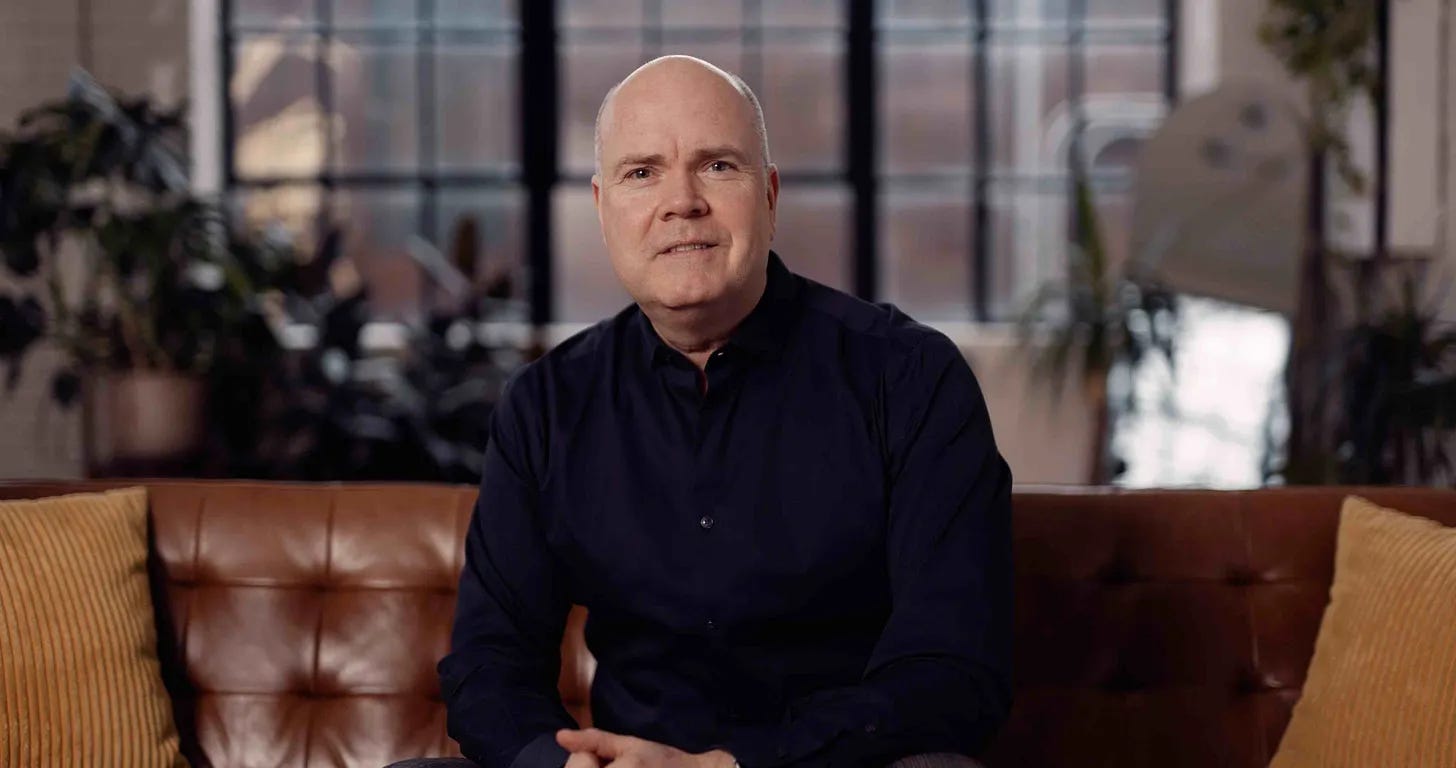
Paul Duffy is the Executive Chairman and CEO of AI/ML Innovations Inc. (CSE: AIML | OTCQB: AIMLF | FWB: 42FB), the parent company of Neural Cloud Solutions Inc. This is the first in a six-part series exploring the future of cardiac AI.
Certain statements in this article may constitute forward-looking information within the meaning of applicable securities laws. Forward-looking statements involve known and unknown risks, uncertainties, and other factors that may cause actual results to differ materially. Readers are cautioned not to place undue reliance on forward-looking statements. AI/ML Innovations Inc. does not undertake to update forward-looking statements except as required by law.
Sources
[1] Resting 12-lead ECG tests performed by patients at home amid the COVID-19 pandemic — Bansal & Joshi, 2022. PubMed Central (PMC9250819); Retrospective Analysis of ECG Data Supports Cardiologists’ Clinical Judgment — GE Healthcare Insights
[2] Holter Monitor — StatPearls, National Institutes of Health (NCBI Bookshelf NBK538203); Holter Monitor: Purpose, Results & How It Works — Cleveland Clinic
[3] 14-day Holter monitoring for atrial fibrillation after ischemic stroke — PubMed Central (PMC10069211), 2023; Holter Monitor — Mayo Clinic
[4] Holter ECG Outlook Report 2026: Market to Reach $1 Billion by 2034 — GlobeNewsWire, 2025; Ambulatory ECG Monitoring — StatPearls, National Institutes of Health (NCBI Bookshelf NBK597374)
[5] AIML Appoints Dr. Paul Dorian as Medical Innovation Architect and Head of the Medical Advisory Board — AccessNewsWire, January 28, 2026; Dr. Paul Dorian — Physician Profile, Unity Health Toronto / Toronto Heart Centre
[6] Advances in Machine and Deep Learning for ECG Beat Classification: A Systematic Review — Frontiers in Digital Health, 2025; ECG-based Machine-learning Algorithms for Heartbeat Classification — Nature Scientific Reports, 2021
[7] Efficient Fiducial Point Detection of ECG QRS Complex Based on Polygonal Approximation — MDPI Sensors, 2018 (PMC6308480); Advanced P Wave Detection in ECG Signals During Pathology — Nature Scientific Reports, 2019
[8] Electrocardiomatrix: A New Method for Beat-by-Beat Visualization and Inspection of Cardiac Signals — OA Text, 2018; 2017 ISHNE-HRS Expert Consensus Statement on Ambulatory ECG and External Cardiac Monitoring/Telemetry — Heart Rhythm Society, 2017
[9] Take an ECG with the ECG app on Apple Watch — Apple Support (support.apple.com/en-us/120278)
[10] Samsung Announces FDA-Cleared Irregular Heart Rhythm Notification for Galaxy Watch — Samsung Newsroom, 2024
[11] AIML Appoints Dr. Alan Rabinowitz as Chief Medical Officer and Director of Medical Partnerships — AI/ML Innovations Inc., January 2025
[12] Worldwide Wearable Device Shipments 2025 — IDC Wearable Devices Market Insights, 2026
[13] Wearable Heart Rate Sensor Market Report 2026 — Research and Markets, 2026
[14] Dr. Brett Heilbron — Medical Director of Electrodiagnostics, St. Paul’s Hospital; Member, Medical Advisory Board, AI/ML Innovations Inc. — AIML.Health
[15] Use of Ambulatory Electrocardiographic (Holter) Monitoring — DiMarco & Philbrick, Annals of Internal Medicine, Vol. 113, No. 1, July 1990
[16] Noise and Artifact in Ambulatory ECG Recordings — Holter Monitor Quality Analysis, Ann Noninvasive Electrocardiol. 2014;20(3):282–289. doi:10.1111/anec.12222
Excellent analysis of the enormous gap in Cardiac Intelligence. Looking forward to the next article